
Why have humans and society become so egoistic today? According to the Gita
According to the Gita, the main causes of egoistic behavior are ignorance, attachment, and body consciousness. This is exacerbated in modern life because humans begin to consider external achievements as their identity. Below is a detailed explanation from the Gita’s perspective:
Avidya (Not Knowing the True Self)
The Gita states that when a person does not recognize their spiritual nature, they consider the ego to be their “I.”
Gita 3.27:
“Ahamkaravimoodhaatma kartahamiti manyate.”
— A person suffering from attachment thinks: “I alone do all the actions.”
Even today, humans consider whatever they do with their intelligence, money, position, and power to be their “complete personal achievement”—this is the root of ego.
 How Dealing with People Who Pretend to Love You How Dealing with People Who Pretend to Love You
|

Sensual attachment and desire for pleasures
The desire to satisfy the senses draws the mind toward external things, and when pride is gained, ego grows.
Gita 16.13–15 describes the ego of a person with demonic tendencies:
“I will do this, this is also mine, I am so powerful…”
Competition and material achievements in today’s life give rise to this type of ego.
Increasing body-pride
When a person considers body, appearance, power, caste, position, status, etc. as their identity, ego naturally grows.
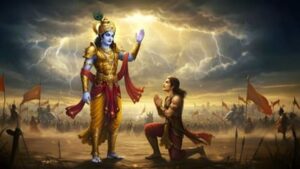
Why the Bhagavad Gita Says You Don’t Need to
|
Gita 2.71:
Only the person who abandons the feelings of “aham” (I) and “mama” (mine) attains peace.
Today, people answer the question “Who am I?” with external things—jobs, social media, fame, looks, lifestyle—this deepens ego.
The Psychology of Comparison and Competition
The Gita explains that when a person compares himself to others—“I am greater than him”—it is ego born of Rajoguna.
Gita 14.17:
Greed and action arise from Rajoguna, and from them ego.
Today’s world is driven by comparison—likes, followers, success, wealth—this over-activates Rajoguna and increases ego.
 |
Mackenzie Casper has always lived in the shadow of her famous mother – a best-selling author whose dark, twisted tales have garnered fans across the world. When her mother dies in a tragic accident, many fans are left grieving. But Mackenzie is left with more than she bargained for when investigators start asking questions. What if what happened wasn’t an accident? What if it was murder? Then, a mysterious envelope arrives, with pages from her mother’s diary: |
 |
Lack of Knowledge and Decline of Spiritual Values
The Gita teaches that humility (Amanitvam) is the first sign of true knowledge.
Gita 13.8:
“Amanitvam Adamhitvam”—the absence of ego and conceit.
When spirituality diminishes, a person defines himself solely by external achievements, and ego grows.
 |
She’s one defiant, forbidden, pain in my as*. One I can’t touch. One I can’t train. But Vivienne is mine. Body. Soul…And most importantly, her bloodline. None of them understand how important she is.
But I know. My sons and I will protect that information – her – to the death to keep it for ourselves. So, she’ll remain here, under my roof…obeying my rules. Resisting me at every goddamn opportunity. Playing her defiant little games with our control. Until I find my resolve slipping. I’m cold, calculating. |
|
Solution—The Way of the Gita
The Gita offers three simple ways to eradicate ego:
1. Karma Yoga— Do your work, have no right to the fruits.
When a person performs his work as if it were dedicated to God, ego does not persist.
2. Gyan Yoga— True Knowledge of the Soul.
Knowing one’s true identity (the soul) dispels the illusion of “I” and “mine.”
3. Bhakti Yoga— Surrender.
Through surrender, a person knows that everything is happening through the power of God, not “I do it.”
 |
|
Ways to Reduce Ego According to the Gita
1. “I am not the doer, but God”— Renouncing the Feeling of Action
While doing every task, have this feeling within:
“I am only an instrument; the real doer is God.”
(Gita 3.27)
This brings a sense of gratitude, not pride, for your work.
2. Perform your work without worrying about the outcome
(Karma Yoga – Gita 2.47)
You have control only over your actions, not over the results.
When you give up expectations of results, ego automatically diminishes because you are freed from the feeling of “I achieved this.”

Boosts Immune System: Garlic has antimicrobial and antiviral properties that help enhance the immune system, making it more effective at fighting off infections. Reduces Blood Pressure: Studies have shown that garlic can help lower high blood pressure, which is beneficial for heart health. It contains allicin, a compound known to relax blood vessels and improve circulation. Improves Cholesterol Levels: Garlic may help reduce bad cholesterol (LDL) levels and raise good cholesterol (HDL), which can lower the risk of heart disease. Supports Heart Health: By lowering blood pressure, improving cholesterol levels, and preventing blood clotting, garlic contributes to better heart health and reduces the risk of cardiovascular diseases.
|
3. Practice Humility (Amanitvam)
(Gita 13.8)
In daily life:
Humble language when speaking
Provide proper respect to others
Replace “I know” with “I am learning.”
Deliberately practice humility for a few moments a day—it gradually becomes a habit.
4. Control of the senses
(Gita 2.58)
The pursuit of the senses (food, luxury, social media, praise) increases ego.
A little restraint and discretion significantly reduces ego.

|
5. Quieting the Comparing Mind
(Gita 14.17)
“I am greater than him,” “I am better than him”—these are the root causes of ego.
Stop comparing and focus on self-development.
6. Practice gratitude
The Gita says—everything happens with the cooperation of nature and God.
Give thanks for 2–3 things every day—you will find that humility, not pride, begins to grow.
|
Guided templates for easy habit tracking and habit stacking Journaling prompts to help you assess your physical and social environments, identify the forces at play, and strategize for greatest habit success Strategies for overcoming the habit plateau and sticking with your habits, even when the going gets rough Plans for adapting your habits to fit your ever-changing life, New ideas from Clear on the role of fun in habit formation
Packed with tips, tricks, and activities, The Atomic Habits Workbook is your step-by-step guide to making small changes that will transform your habits and deliver remarkable results. Praise for Atomic Habits “A supremely practical and useful book. James Clear distills the most fundamental information about habit formation, so you can accomplish more by focusing on less.” |
7. Loosen the grip of “I” and “mine” from the mind
(Gita 2.71)
Ask within yourself—
“Is all this really mine? Or has life given me this for a short time?”
This thought gradually melts the ego.
8. Satsang, Meditation, and Chanting
(Gita Chapter 6)
In meditation, the mind calms and the ego diminishes.
Through chanting, the ‘I’ becomes small and the ‘God’ becomes a greater entity.
Note: What do you think about “Why has today’s man become so arrogant?” Please let us know in the comments section below. Your opinion is very important to us.
 |
Qutub Minar History Mystery |
 |
 |
Mystical Khajuraho – Where Sculptures Whisper Stories |
|
 |
Jaisalamer Ka Fort- Rajeshtaan |
|